What Cold Air Actually Does to the Skin Barrier — And How to Support Skin Through Winter

Share
When temperatures drop, your skin often notices before the rest of you does.
Tightness after cleansing. Dry patches that appear seemingly overnight. A complexion that suddenly feels rougher, less comfortable or more reactive. We often blame “cold weather”, but temperature is only part of the story.
Winter brings a combination of cold outdoor air, lower humidity, indoor heating and rapid temperature changes. Together, these factors can alter the environment around the skin barrier and make it harder for the skin's outermost layer to retain water.
Research backs this up. A study of 72 women across all four seasons found that facial skin hydration and sebum levels were lowest in winter, while transepidermal water loss—the movement of water through the skin—was highest.
Even short exposure may matter. A 2025 study found measurable barrier changes after just one hour of low-humidity exposure in a reconstructed human epidermal model.
So, what is actually happening beneath the surface — and can your daily routine help?
First: What Is the Skin Barrier?
The skin barrier refers primarily to the stratum corneum, the outermost layer of the epidermis.
One common analogy is a brick wall. Skin cells act like bricks, while lipids — including ceramides, cholesterol and fatty acids — form the mortar around them.
Together, they help keep moisture in while helping protect the body from external stressors.
When the barrier is functioning normally, skin tends to feel smoother, more comfortable and better able to hold onto water. When that barrier becomes compromised, water can escape more easily through a process known as transepidermal water loss (TEWL).
The result can be skin that feels dry, tight, rough or sensitive.
What Does Cold Air Actually Do to Your Skin?
Cold itself is only one factor.
Winter air generally contains less moisture than warmer air. Then we move indoors and turn up the heating, creating another low-humidity environment. Skin can therefore spend much of the day moving between cold, dry outdoor conditions and warm, dry indoor conditions.
A seasonal study found significant differences in several skin measurements throughout the year, including hydration, sebum production and TEWL. On facial skin, stratum corneum hydration and sebum were lowest during winter, while TEWL peaked.
An earlier study also found that unexposed skin had lower hydration during winter and was more susceptible to irritation than in summer.
More recent research is beginning to explain why. The 2025 low-humidity study found increased TEWL alongside changes involving proteins important to barrier structure, including filaggrin and loricrin.
In simple terms: winter doesn't just make your skin's surface feel dry. The surrounding environment can influence how effectively the barrier itself functions.
Why Indoor Heating Can Make Things Worse
You might escape the cold by going inside, but your skin doesn't necessarily escape the dry environment.
Central heating can reduce indoor relative humidity. That creates a stronger moisture gradient between your skin and the surrounding air, potentially encouraging water to leave the skin more readily.
Long hot showers can add another layer to the problem. Although hot water feels comforting in winter, frequent exposure can strip some of the lipids and oils that help support the skin's surface.
That is why winter skin support is less about adding one extra moisturiser and more about adjusting the whole daily environment around your skin.
Think gentle cleansing, lukewarm rather than very hot water, moisturising after washing, adequate fluid intake and nutrition that supports normal skin function.
And this is where daily rituals can become useful.
Morning: Matcha + Tremella
A winter skin routine doesn't have to begin in the bathroom.
Your first drink of the day can become part of a wider routine built around hydration, nutrition and consistency.
DIRTEA Matcha combines ceremonial-grade Japanese matcha with Lion's Mane, 1,250 mg of Tremella per serving, moringa and a B-vitamin complex.
Tremella fuciformis, sometimes called snow mushroom, is particularly interesting in the context of skin.
Tremella contains distinctive polysaccharides with notable water-binding properties.
Research has investigated Tremella polysaccharides for a range of biological properties and potential applications, including within skin and cosmetic formulations.
It's important to distinguish between topical and dietary evidence here: much of the existing research relates to isolated Tremella polysaccharides, laboratory models or topical formulations, rather than proving that drinking Tremella directly moisturises human skin.
Matcha brings another interesting dimension. It naturally contains polyphenols, including catechins.
In a 12-week study, 60 women consumed either a beverage rich in green tea polyphenols or a control drink. The green tea group showed improvements in several measures of skin structure and function, including hydration and water homeostasis.
That doesn't make matcha a replacement for moisturiser or SPF. But it does make a warm matcha a simple addition to a broader winter wellness ritual.
Daytime: Add Collagen to Your Routine
Collagen is the most abundant protein in the human body and provides structural support to tissues including the skin.
As we age, the skin's collagen content and organisation change, contributing to changes in elasticity, firmness and appearance. That has made oral collagen peptides an increasingly studied area of skin nutrition.
A 2023 meta-analysis reviewed 26 randomised controlled trials involving 1,721 participants and found that hydrolysed collagen supplementation was associated with improvements in skin hydration and elasticity. The researchers also highlighted variation and potential bias across the studies, so the findings should be interpreted within those limitations.
DIRTEA Collagen provides 5 g of hydrolysed Type I & III Peptan® bovine collagen peptides per daily serving, with no flavourings, fillers or sweeteners.
Because it is unflavoured, it is easy to add to a routine you already have. Stir it into your morning matcha, add it to coffee, blend it into a smoothie or simply mix it with water.
You don't need to chase a specific “collagen window”, either. For a daily supplement, building a routine you can follow consistently is more useful than worrying about whether you take it at breakfast or 3 p.m.
That makes collagen particularly easy to slot into the middle of a winter day.
Afternoon or Evening: Beauty Gummies + Tremella
By later in the day, your skin may have experienced several different environments: heated rooms, cold streets, wind, public transport, offices and possibly a workout or hot shower.
This is where another simple ritual can fit naturally.
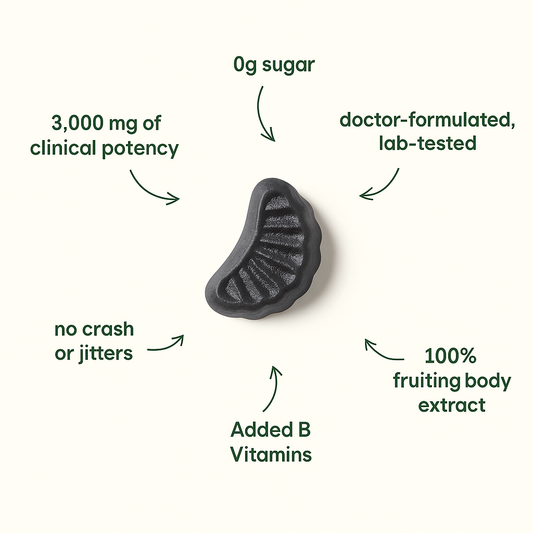
DIRTEA Beauty Gummies provide 3,000 mg of Tremella per two-gummy serving, alongside vitamin C, biotin, zinc, selenium and vitamins A and E.
Importantly, some of the strongest established skin-related benefits here come from the added micronutrients.
Vitamin C contributes to normal collagen formation for the normal function of skin, while vitamin A contributes to the maintenance of normal skin. Biotin contributes to the maintenance of normal skin and hair, while selenium and zinc contribute to the maintenance of normal hair and nails.
The gummies can be taken whenever they fit naturally into your day — after lunch, as part of an afternoon routine or alongside your evening skincare ritual.
Rather than expecting an overnight transformation, the point is to make supportive nutrition part of something you do consistently.
A Simple Morning-to-Evening Winter Skin Ritual
Supporting your skin through colder weather doesn't have to mean building an elaborate routine.
Morning: Make a warm DIRTEA Matcha with Tremella, Lion's Mane, moringa and B vitamins.
Morning or daytime: Add your daily 5 g serving of DIRTEA Collagen to your matcha, coffee, water or smoothie. If you prefer, you can combine the matcha and collagen into one simple morning ritual.
Afternoon or evening: Take two Beauty Gummies, bringing together Tremella with vitamin C, biotin, zinc, selenium and vitamins A and E.
Alongside these internal rituals, keep the external basics simple: cleanse gently, avoid excessively hot showers, moisturise while the skin is still slightly damp and continue wearing SPF during winter.
The idea isn't to add more and more steps.
It's to create a few repeatable ones.
Skin Barrier Support Is About Consistency
There is no single supplement, mushroom or skincare product that can make your skin immune to winter.
The skin barrier is dynamic. It responds to temperature, humidity, cleansing habits, skincare, UV exposure and numerous individual factors.
What research does show is that season matters.
Winter conditions can reduce skin hydration and influence barrier function, helping explain why skin that feels perfectly balanced in summer may suddenly feel dry or uncomfortable when temperatures fall.
The most useful response is therefore not to approach winter dryness from one direction.
Protect the surface of the skin while supporting the body with good nutrition, hydration, sleep and routines you can sustain.
That could look as simple as Matcha and Tremella in the morning, collagen worked into your day, and Beauty Gummies later on.
Three small rituals. Built into one winter day.
Because your daily ritual matters — particularly when the environment changes.
FAQs
Why does my skin get so dry when it's cold?
Cold weather is usually accompanied by lower humidity, while indoor heating can make the air inside even drier. These conditions can affect the skin's water content and barrier function, contributing to dryness, roughness and tightness.
Does cold air damage the skin barrier?
Research suggests winter conditions and low humidity can influence skin barrier function, hydration and transepidermal water loss. The effect varies between individuals and depends on factors including humidity, skincare habits and skin type.
Does Tremella hydrate the skin?
Tremella contains polysaccharides with interesting water-binding properties, and laboratory, animal and topical studies have investigated their moisturising and skin-supportive potential. Evidence for oral Tremella producing the same effects in human skin is still developing, so it is better viewed as part of a wider nutrition and wellness routine rather than a replacement for topical skincare.
Can collagen support skin hydration?
Research into oral hydrolysed collagen suggests supplementation may support skin hydration and elasticity. A 2023 meta-analysis of 26 randomised controlled trials found improvements in both measures, although study formulations and quality varied. Collagen should therefore form part of a wider approach to skin health rather than replace moisturiser, SPF or a balanced diet.
When should I take DIRTEA Matcha, Collagen and Beauty Gummies?
Matcha fits naturally into the morning or early afternoon. Collagen can be mixed into your matcha, coffee, smoothie or water at a time that works for you. Beauty Gummies can then fit into the afternoon or evening. Rather than worrying about taking everything at the same time, build each product into a part of the day you can maintain consistently.
References
Yang, J., Tu, Y., Man, M. Q., et al. (2020). Seasonal variations of epidermal biophysical properties in Kunming, China: A self-controlled cohort study. Skin Research and Technology, 26, 702–707. https://doi.org/10.1111/srt.12857
Izutsu-Matsumoto, Y., Okano, Y., Masaki, H., Tokudome, Y., & Iwabuchi, T. (2025). Effect of low humidity on the barrier functions of keratinocytes in a reconstructed human epidermal model. International Journal of Cosmetic Science, 47(3), 523–534. https://doi.org/10.1111/ics.13048
Agner, T., & Serup, J. (1989). Seasonal variation of skin resistance to irritants. British Journal of Dermatology, 121(3), 323–328. https://pubmed.ncbi.nlm.nih.gov/2803958/
Ma, X., Yang, M., He, Y., Zhai, C., & Li, C. (2021). A review on the production, structure, bioactivities and applications of Tremella polysaccharides. International Journal of Immunopathology and Pharmacology, 35, 20587384211000541. https://doi.org/10.1177/20587384211000541
Heinrich, U., Moore, C. E., De Spirt, S., Tronnier, H., & Stahl, W. (2011). Green tea polyphenols provide photoprotection, increase microcirculation, and modulate skin properties of women. The Journal of Nutrition, 141(6), 1202–1208. https://doi.org/10.3945/jn.110.136465
Pu, S.-Y., Huang, Y.-L., Pu, C.-M., Kang, Y.-N., Hoang, K. D., Chen, K.-H., & Chen, C. (2023). Effects of oral collagen for skin anti-aging: A systematic review and meta-analysis. Nutrients, 15(9), 2080. https://doi.org/10.3390/nu15092080